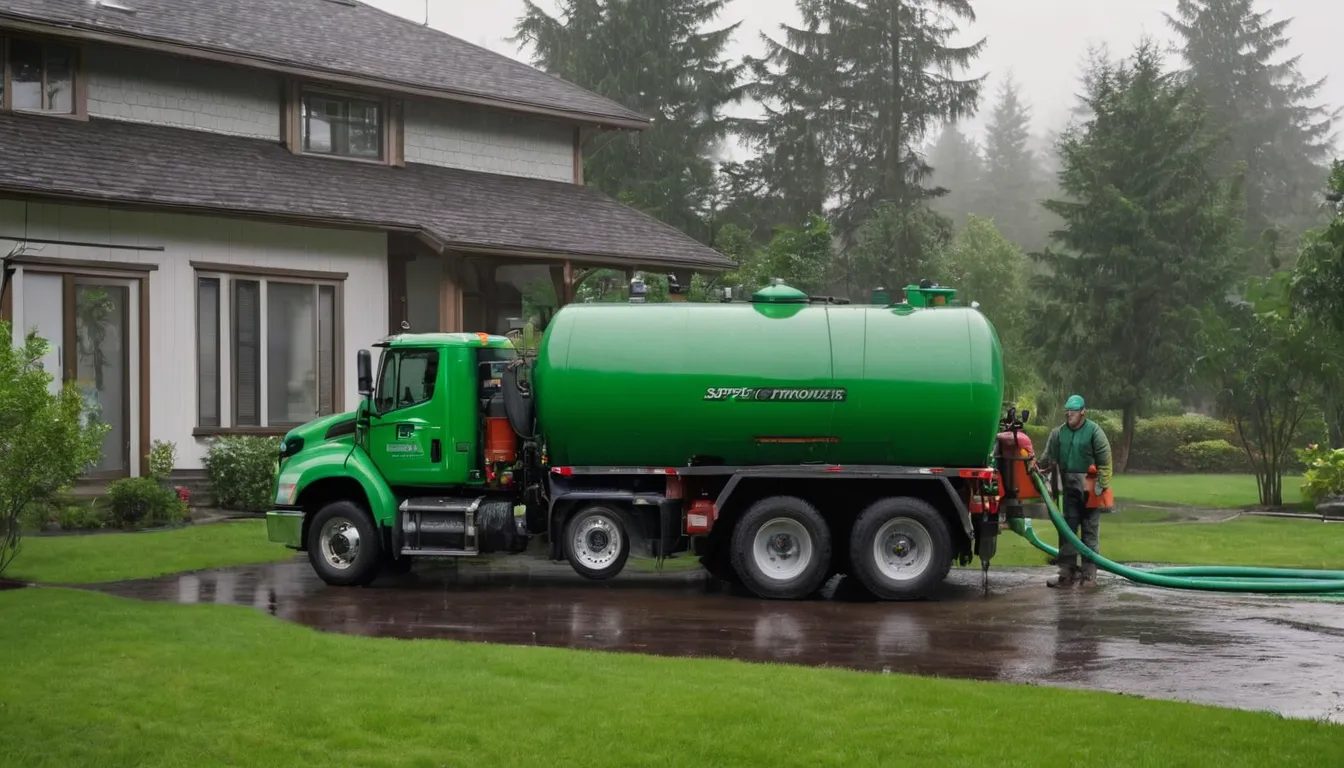
Septic Tank Pumping
A full septic tank gives warnings first, and acting on them early keeps a small job from becoming a large one.
Slow drains, odd smells or a soggy yard? Tell us what you see. We connect you with an independent local provider who can look at the problem and explain your options.
No obligation
Say you come home after a long, rainy week. The shower drains slowly. The toilet gurgles when the washer runs. Out back, one patch of lawn looks darker and softer than the rest.
That is a septic or sewer problem asking for attention. Chronicproducts Septic is a referral service. We connect homeowners in the Seattle area with independent local providers who handle septic tank pumping, sewer line repair and septic system repair. We do not do the work ourselves.
The first hours matter. A slow drain can turn into a backup in a day or two. A backup can soak flooring and a crawl space within days. Waiting lets small trouble grow into a bigger bill.
Request a callback to check provider availability in Seattle, or use the form to request an estimate. Many providers can respond quickly, though availability varies.
Before you reach out, grab your phone and take a few photos. Write down when the trouble started. That small step makes every later conversation easier.
Tell us what is happening. Maybe a tank is overdue for pumping. Maybe a sewer line is backing up into the yard. You can use the request form, or Request a callback to check provider availability.
We pass your details to a provider in our network that serves your part of the Seattle area. The provider then contacts you, looks at the problem and gives you a written quote. You decide what happens next.
Chronicproducts Septic does not pump tanks, dig up pipes or fix drainfields. The providers in our network do that work. They are independent businesses. Each one sets its own prices, schedule and terms.
That means we cannot promise a price or an arrival time. We can make the first step simple.
Picture a tank that is a little too full. On day one, you notice a slow sink. By day two or three, the toilet gurgles. By the end of the week, wastewater may rise in the drain closest to the floor, such as a basement shower or floor drain. Outside, a saturated drainfield can start to smell.
Each stage costs more to clean up than the one before. Catching trouble early often keeps the job smaller.
A provider can work faster when you have details. Keep photos, dates and any past pumping receipts in one place. If damage has already happened, those notes can also help when you talk with your insurance company. Some policies may cover sudden damage, so check your policy.
We connect homeowners across Seattle and the rest of the Seattle area with local providers. That includes older craftsman houses, newer townhomes and wood-frame homes with crawl spaces.
Imagine a stretch of wet weeks. The ground is soaked, the moss is thick and the wind has been blowing. A drainfield that is already tired has nowhere to send water. A problem that might have stayed quiet in dry months shows up fast.
Crawl spaces add another worry. A leak or backup under the house can sit unseen. Damp wood and a musty smell are early signs. A provider can check the space and tell you what is going on.
Not every address is the same. Some homes are on sewer lines. Some use a septic tank. Some also have a private well, so the yard may hold more than one system. When you reach out, tell us what your property has. We will match you with a provider who works with that setup.
Request a callback to ask which providers serve your street, or send a request through the form.
If you are outside Seattle but within the Seattle area, ask anyway. Coverage depends on the provider.
Steady rain fills the soil. A drainfield needs dry, open soil to take in water from the tank. When the ground is soaked, the water has nowhere to go. That is when drainfield repair questions often start.
Slow drains, gurgling pipes, a sewage smell, bright green grass over the tank area, or standing water in the yard. Any one of these is a reason to take photos and ask a provider.
When wastewater is backing up inside the house, ask about emergency septic cleaning. Many providers can respond quickly, but availability varies. Request a callback to check provider availability.
Septic tank pumping is often needed every few years. Household size and tank size change that. Many U.S. homeowners pay roughly $300 to $700, but prices vary by job. Always get a written quote.
Older homes may have aging pipes. Roots can slip into small cracks and slow flow. Repair costs range widely, from several hundred dollars for a small fix to several thousand for a larger dig. A written quote helps you compare.
Some properties have a private well near the septic system. If the water looks, smells or tastes different, ask about water well service as well. A provider can help you understand what to check.
Take dated photos of the area. Write down what you noticed and when. Save pumping receipts and past repair records. Providers can often help document damage for a claim. Some policies may cover sudden damage, so check your policy.
Say it is evening and the drain just gurgled again. You do not have to guess what comes next. Describe what you see, add a few photos if you can, and a local provider can follow up.
Request a callback to check provider availability, or send the form and request an estimate. There is no obligation to hire anyone.
Have your address and a short note ready, and the process goes faster.
Many homes need septic tank pumping every three to five years. A bigger household or a smaller tank may need it sooner. A local provider can look at your tank and suggest a schedule that fits.
Watch for soggy ground, a sewage smell outside, slow drains inside and unusually bright green grass over the field. These can point to drainfield repair needs. Take photos and ask a provider to inspect it.
In the U.S., costs vary widely by job. A small fix may run several hundred dollars, while a larger dig can reach several thousand. Ask for a written quote and compare the scope.
It depends on your policy. Some policies may cover sudden damage, but many exclude wear and tear. Check your policy. Providers can often help document damage for a claim.
Take dated photos of the problem, such as drains, wet spots and any crawl space water. Write down when it began and when the tank was last pumped. Note whether you also have a private well. Those details help a provider give a clearer estimate.
Tell us what you are seeing and where. Request an estimate and a local provider from our network can follow up with next steps.
Three kinds of help are available through providers in our network. Pick the one that sounds like your situation. If you are not sure, describe what you see and a provider can help sort it out.
A full septic tank gives warnings first, and acting on them early keeps a small job from becoming a large one.
A damaged sewer line gets worse with time, so quick photos, notes and a provider match can protect your home.
Slow drains and soggy ground are early warnings, and a local provider can find the cause before it spreads.
Describe the problem once. We pass it to a provider in our network, so you are not hunting through listings while a drain keeps backing up.
The work is done by local, independent businesses. They give you the written quote and the plan.
We explain what usually happens over hours and days, so you can tell when a small problem is turning into a bigger one.
Photos, dates and receipts make estimates smoother. We show you what to gather before you talk with a provider or insurer.
Tell us what you are seeing and where. Request an estimate and a local provider from our network can follow up with next steps.
No obligation